Fun Fact:
John Pedro
The remarkable journey of a Black man whose story connects early Plymouth to colonial Virginia.
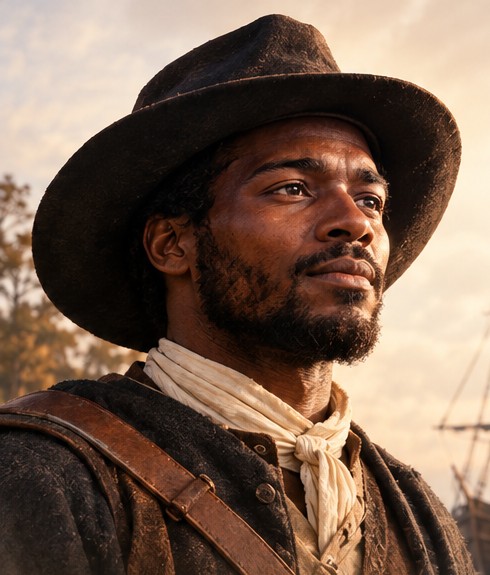
When we picture the Pilgrims, we rarely picture Black people among the earliest arrivals in New England. But the story of John Pedro, also known as Juan Pedro, offers a fascinating glimpse into a more complicated colonial past.
A journey aboard the Swan. Pedro was associated with the ship Swan, which traveled between New England and Virginia in the early 1620s. Historical accounts place him in the Plymouth area around 1623, during the period when Thomas Weston’s nearby Wessagusset settlement was being established. The surviving records do not establish exactly how long Pedro stayed in Plymouth or whether he belonged to its religious community.
His name in the records. By February 1625, Pedro was living in Virginia in the household of Captain Francis West, near present-day Hampton. A colonial muster identified him as a Black man, about 30 years old, listed his ship as the Swan and his arrival year as 1623. It also recorded his status as a servant—so the claim that he was a confirmed freeman and Plymouth militiaman at that time goes beyond what these records prove.
From servitude to landownership. Pedro’s story did not end there. Research published by the Hampton History Museum reports that he had become free by the early 1650s and briefly owned land in Lancaster County, Virginia, before moving to Maryland. That transformation makes his life a particularly compelling part of early Black American history.
Pedro was not a Mayflower passenger, and there is no evidence he attended the 1621 harvest gathering remembered as the first Thanksgiving. His life is a reminder that the history of early America was more diverse—and more complicated—than the familiar paintings suggest.
History note: Some retellings link Pedro to the Wessagusset expedition or describe him as a free Plymouth militiaman. Those details are not securely established by the surviving records. The Virginia muster and his later freedom and landownership are better documented.
← Back to the Invitation